
Data Driven Site Management
May 13, 2026
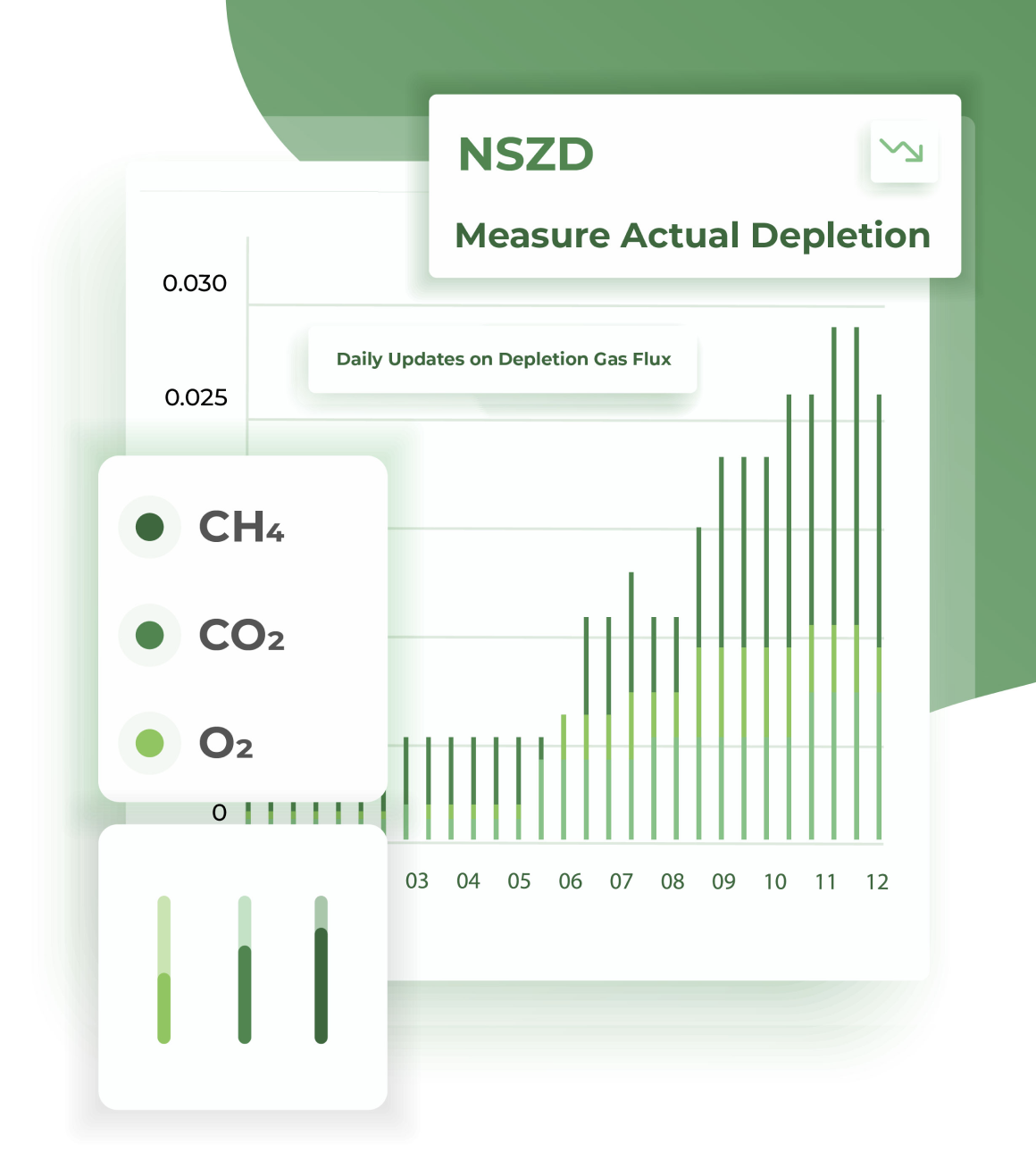
Effective resource allocation and enhancement to operational efficiency. With only 6 sensors and LiORA Insights there was dramatic acceleration in decision-making processes with sensor data and analytics to showcase:
- Bioremediation injection effectiveness
- NSZD rates quantified for transition decision
- Vapor intrusion protection maintained
- Portfolio optimization achieved
Executive Summary
LiORA's monitoring system successfully guided remediation decision-making at a contaminated site in an urban area, where historical impacts had migrated onto neighboring property near residential buildings. Through integrated soil and water monitoring, LiORA provided real-time assessment of remediation effectiveness and Natural Source Zone Depletion rates, enabling data-driven decisions about transitioning from active remediation to natural attenuation management. As a result, the management team transitioned this site into a closure process, allowing them to deploy the remediation system at another site and increase operational efficiency.
Project Background
Site Challenges
A contaminated site next to a residential complex presented urban environmental challenges. With historical contamination extending beyond property boundaries onto neighbouring land and the proximity to residential buildings raising concerns about vapour intrusion, there was a need for a rapid remediation response in an urban setting. Critical decision required: when to transition from active to passive management.
Remediation Implementation
Historical data review confirmed immediate remediation needs:
• Active Treatment: 8 BioLodestone injection points installed to promote biodegradation
• Soil Monitoring: 4 Soil Sensors deployed to monitor subsurface conditions
• Plume Understanding: 2 Water Sensors to monitor groundwater effectiveness
Key Results
Remediation Effectiveness Assessment
LiORA's monitoring provided definitive evidence of treatment performance:
- Active Treatment Success: Real-time data demonstrated BioLodestone injection effectiveness in promoting biodegradation.
- NSZD Rate Quantification: Continuous monitoring enabled precise calculation of Natural Source Zone Depletion rates, providing a scientific basis for transition decisions.
- Risk Reduction: Ongoing monitoring confirmed a reduction in vapour intrusion risk to residential buildings.
Strategic Decision Support
Comprehensive monitoring data enabled confident remediation strategy decisions:
- Optimal Transition Point: LiORA data clearly identified when active remediation achieved maximum effectiveness and natural attenuation could maintain protective conditions.
- Resource Optimization: Real-time assessment supported transition from active to passive management, freeing resources for other priority sites.
- Regulatory Confidence: Continuous monitoring data provided agencies with confidence in management transition decisions.
Impact and Benefits
Portfolio Management Optimization
LiORA's insights transformed site management across the client's portfolio:
- Resource Reallocation: Data-driven transition enabled resource deployment to higher-riority locations requiring active intervention.
- Cost Optimization: Avoided unnecessary continued active remediation while maintaining protective effectiveness.
- Decision Template: Successful monitoring-based approach established framework for similar sites.
Community Protection
Continuous monitoring ensured ongoing protection for residential receptors:
- Vapor Intrusion Prevention: Real-time monitoring maintained protection against vapor intrusion risks.
- Transparent Communication: Continuous data supported transparent stakeholder communication.
- Proactive Management: Monitoring enabled immediate response to changing conditions.
Technical Innovation
Integrated Monitoring Approach
LiORA's comprehensive system provided superior site intelligence:
- Multi-Media Coverage: Combined soil and water monitoring delivered complete site understanding.
- Real-Time Analytics: Continuous NSZD calculations enabled immediate natural attenuation assessment.
- Decision Support: Advanced analytics transformed monitoring data into actionable management recommendations.
Lessons Learned
Real-time monitoring provides the data resolution necessary to identify optimal transition points from active to passive remediation management.
Successful site-specific optimization creates templates and confidence for improved management across multiple sites.
Complex urban contamination necessitates sophisticated monitoring to strike a balance between protective effectiveness and resource optimization.
Conclusion
LiORA's comprehensive monitoring at this site successfully transformed remediation decision-aking from an assumption-based to an evidence-based approach. Through integrated monitoring, LiORA provided the real-time intelligence necessary to optimize the transition from active remediation to natural attenuation while maintaining residential protection.
The project's success in identifying optimal transition timing while ensuring protective effectiveness demonstrates the value of continuous monitoring in complex urban scenarios. Most importantly, the insights enabled better prioritization of remediation activities across other sites, optimizing resource allocation and improving overall portfolio management.
This case study establishes LiORA as an essential technology for site managers, balancing protective effectiveness with resource optimization, thereby transforming site management from reactive to proactive, data-driven decision-making.
Team Leads

Steven Siciliano
As CEO of LiORA, Dr. Steven Siciliano brings his experience as one of the world’s foremost soil scientists to the task of helping clients to efficiently achieve their remediation goals. Dr. Siciliano has made significant contributions to the progress of environmental and soil science with 11 book chapters and 220 scientific papers which have been cited over 17,000 times.
Discover More
The latest industry news, interviews, technologies, and resources.
Advancing Remediation Toward Closure
14 July 2026
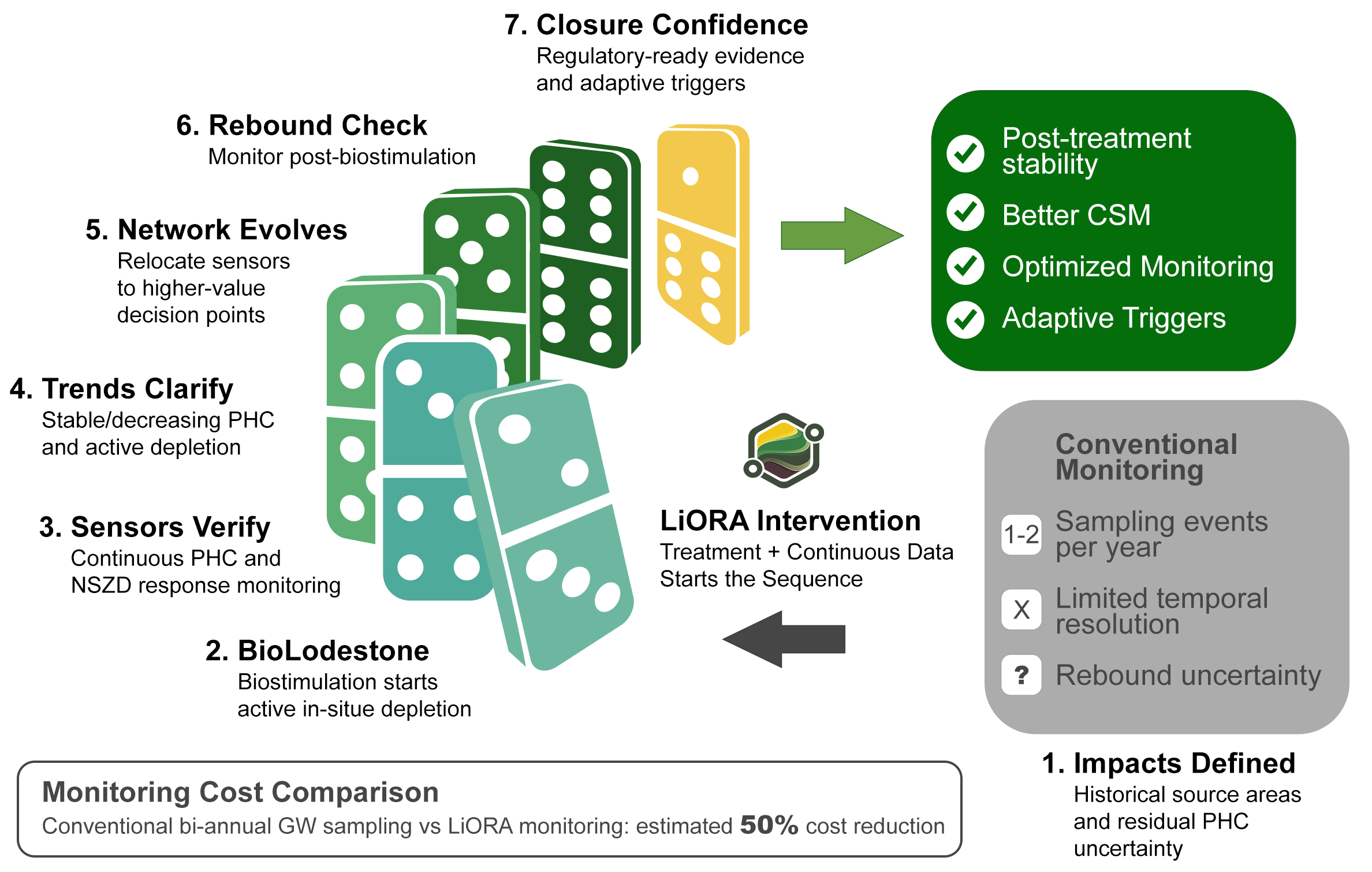
By pairing BioLodestone biostimulation with a continuous soil sensor network, we advanced a former Alberta bulk fuel site toward closure while collecting more than 175,000 data points over 20 months. The sensor record replaced conventional groundwater sampling as the primary monitoring evidence, confirming stable-to-declining PHC conditions and active depletion at roughly 50% lower annual cost than a twice-yearly sampling program.

Operational Savings in Remediation Phase
15 May 2026
Achieving $184,500 in operational savings was possible through SVE/MPE optimization and showcasing the average 14.9 kg/day depletion rate to the regulator with effective real-time monitoring.