How Salinity Impacts Ecosystems
Introduction: A Subtle Shift with Lasting Consequences
Salinity is often associated with oceans and coastal environments, but it can also emerge in places where it’s far less expected: soils, aquifers, and freshwater ecosystems.
When chloride levels increase, whether from brine spills, industrial activity, or road salts, it can elevate salinity in the subsurface. Unlike many contaminants, chloride does not degrade. It moves with groundwater, quietly altering environmental conditions over time.
The result isn’t always immediate or visible. But beneath the surface, salinity changes can disrupt ecosystems in ways that are difficult and expensive to reverse.
What Is Salinity, and Why Does It Matter?
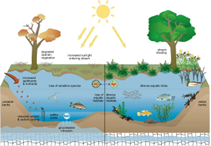
Salinity refers to the concentration of dissolved salts in water or soil. In many inland environments, chloride is the dominant contributor to salinity.
Even small increases in salinity can shift environmental balance.
Why this matters:
- Plants rely on osmotic balance to absorb water
- Freshwater species are adapted to low-salinity conditions
- Soil chemistry is sensitive to dissolved ions
When salinity rises, these systems begin to experience stress.
Impact on Vegetation: When Water Becomes Harder to Use
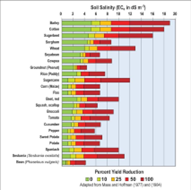
One of the most immediate effects of increased salinity is on plant life.
High salinity reduces a plant’s ability to absorb water, even when water is present. This is known as osmotic stress.
Over time, this can lead to:
- Reduced growth and crop yield
- Leaf burn and tissue damage
- Root system disruption
- Long-term vegetation loss
In natural ecosystems, this can shift species composition. Salt-tolerant plants may replace native vegetation, altering habitat structure and biodiversity.
Impact on Freshwater Ecosystems: Disrupting Delicate Balance
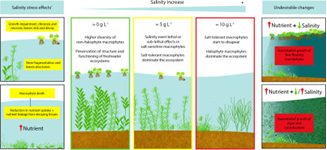
Freshwater ecosystems are particularly sensitive to salinity changes.
Fish, amphibians, and aquatic invertebrates are adapted to very specific salinity ranges. When those conditions change, even slightly, it can affect survival, reproduction, and behavior.
Potential impacts include:
- Reduced biodiversity
- Changes in species dominance
- Increased stress and mortality in sensitive species
- Altered food webs and ecosystem dynamics
In some cases, salinity changes can promote algal growth or reduce oxygen levels, compounding ecological stress.
Impact on Soil Health: Long-Term Structural Change
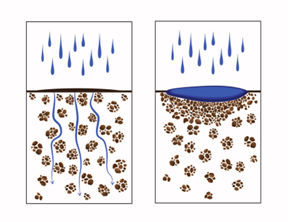
Salinity doesn’t just affect what grows in soil—it changes the soil itself.
Elevated chloride and associated salts can:
- Disrupt soil structure
- Reduce permeability and water infiltration
- Increase erosion risk
- Limit nutrient availability
These changes can persist long after the initial contamination event, making recovery difficult and slow.
Why Salinity Impacts Are Often Missed
One of the biggest challenges with salinity is how quietly it develops.
Unlike visible spills or surface contamination, subsurface salinity changes often:
- Occur gradually over time
- Spread through groundwater flow
- Remain undetected between sampling events
By the time impacts are visible—vegetation stress, ecosystem decline, soil degradation—the underlying plume may already be extensive.
The Role of Monitoring: Seeing Change Before It Spreads
Protecting ecosystems from salinity impacts starts with understanding how chloride is moving underground.
Monitoring approaches matter.
Traditional sampling provides snapshots in time. But salinity dynamics are continuous.
More frequent or continuous monitoring enables:
- Early detection of rising chloride levels
- Identification of plume movement trends
- Faster, more informed remediation decisions
- Better protection of sensitive receptors (vegetation, water bodies, habitats)
By increasing temporal resolution, not just spatial coverage, operators can move from reactive response to proactive management.
Small Changes, Big Consequences
Salinity is a subtle but powerful force in environmental systems.
Driven by chloride contamination, it can reshape ecosystems from the ground up—affecting plants, water, and soil in interconnected ways.
Because these changes often happen out of sight, monitoring becomes critical.
Understanding salinity isn’t just about measuring salt. It’s about protecting the systems that depend on balance.
If you’re managing sites where chloride contamination is a risk, early insight matters. Continuous monitoring can help you detect changes sooner, understand plume behavior, and make more confident environmental decisions before impacts spread. Book a demo to see how LiORA can help.
Author

As CEO of LiORA, Dr. Steven Siciliano brings his experience as one of the world’s foremost soil scientists to the task of helping clients to efficiently achieve their remediation goals. Dr. Siciliano is passionate about developing and applying enhanced instrumentation for continuous site monitoring and systems that turn that data into actionable decisions for clients.